
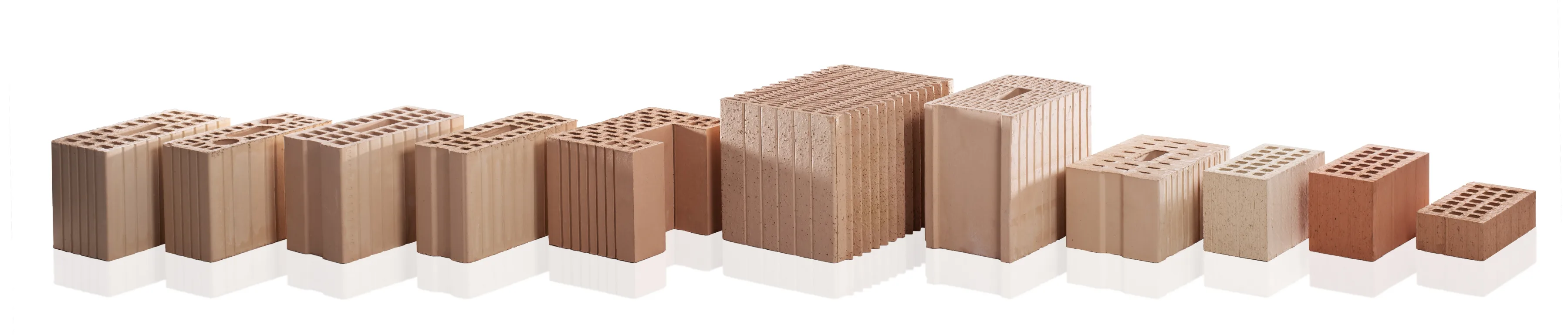
Bricks
Standard bricks, thermal and sound-insulating bricks, reinforced and earthquake-resistant masonry, exposed masonry, roof tiles and wine storage — all from Swiss clay, all certified.
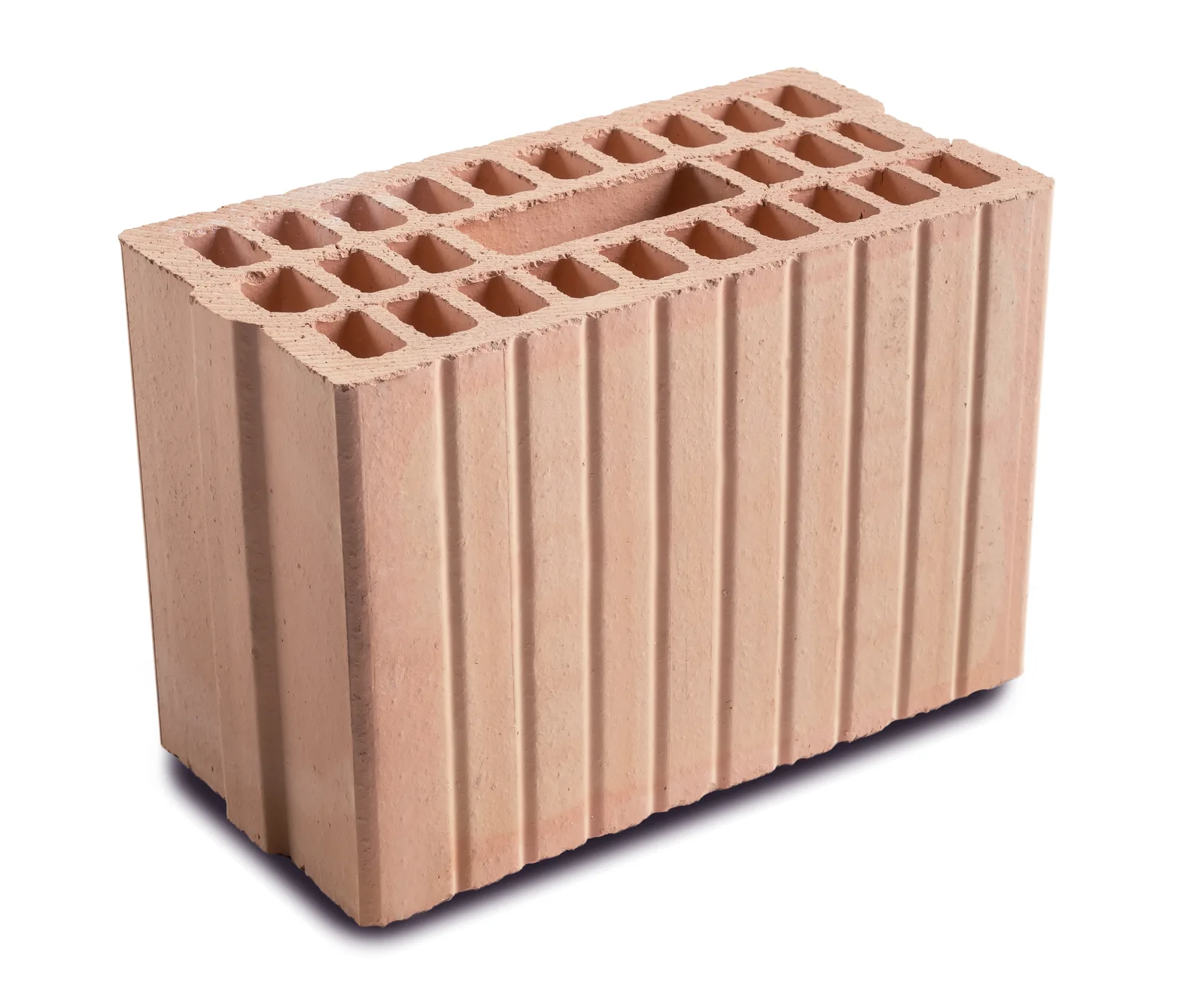
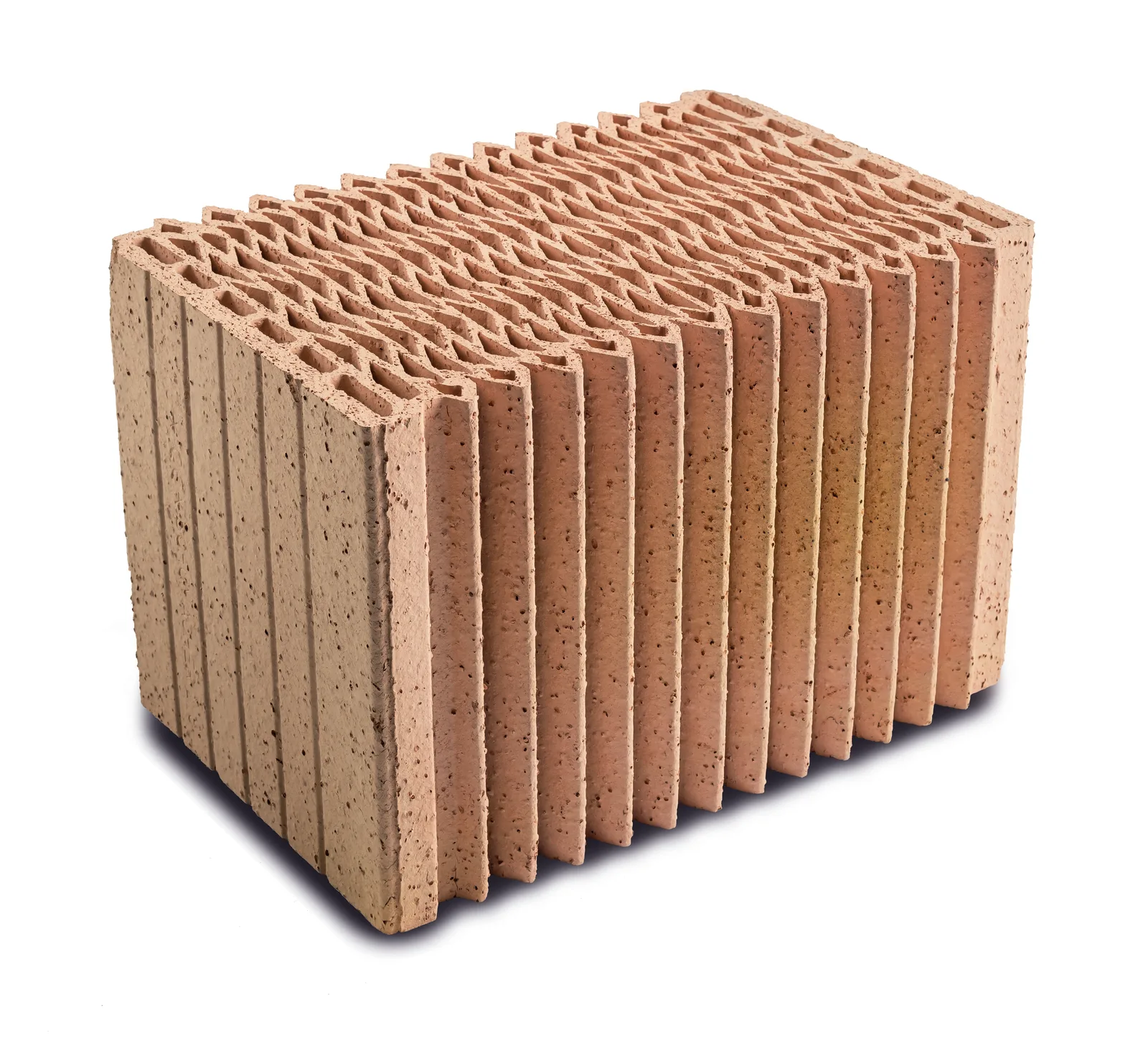
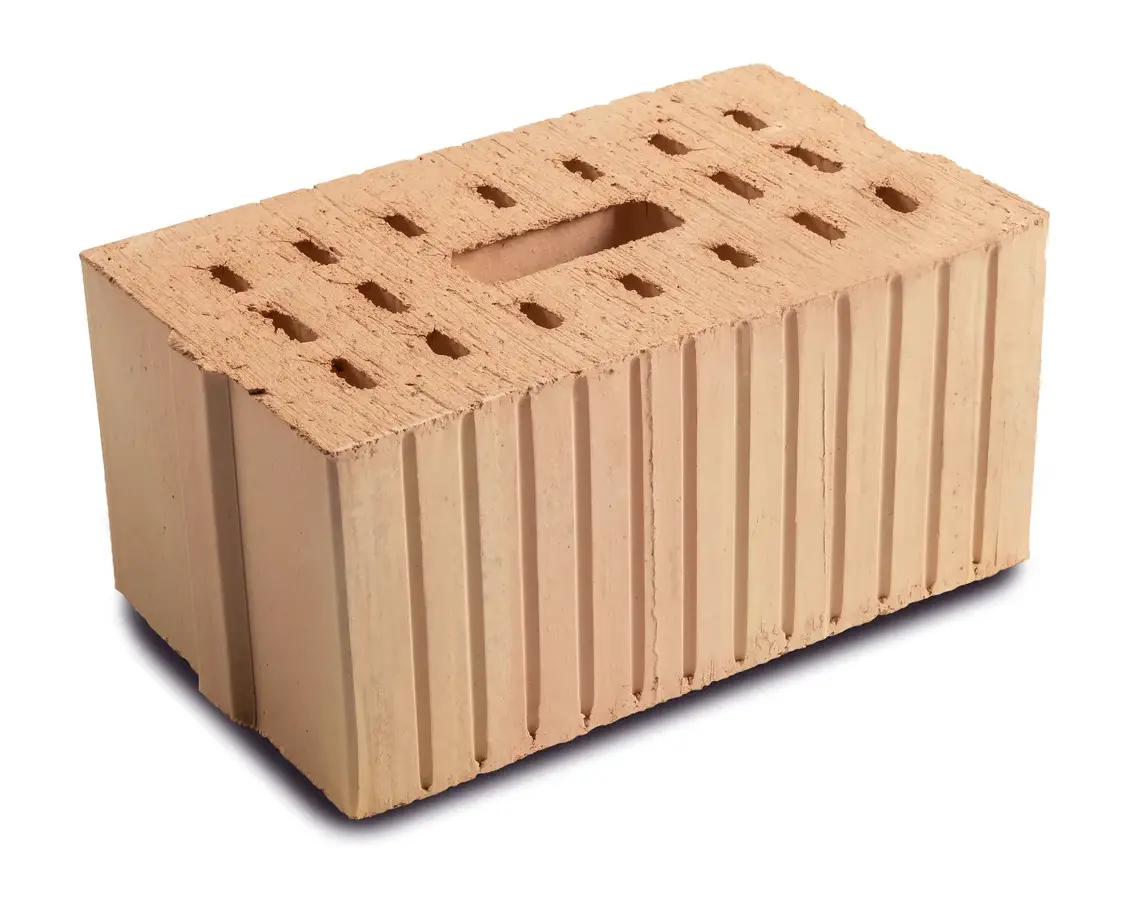
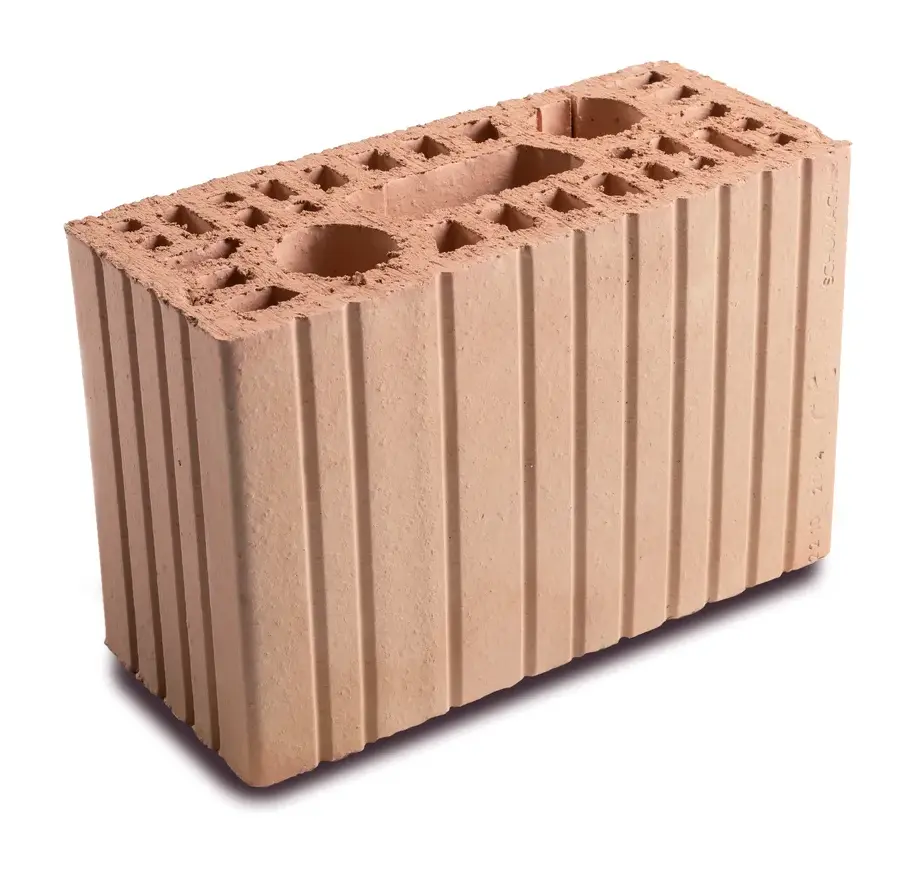
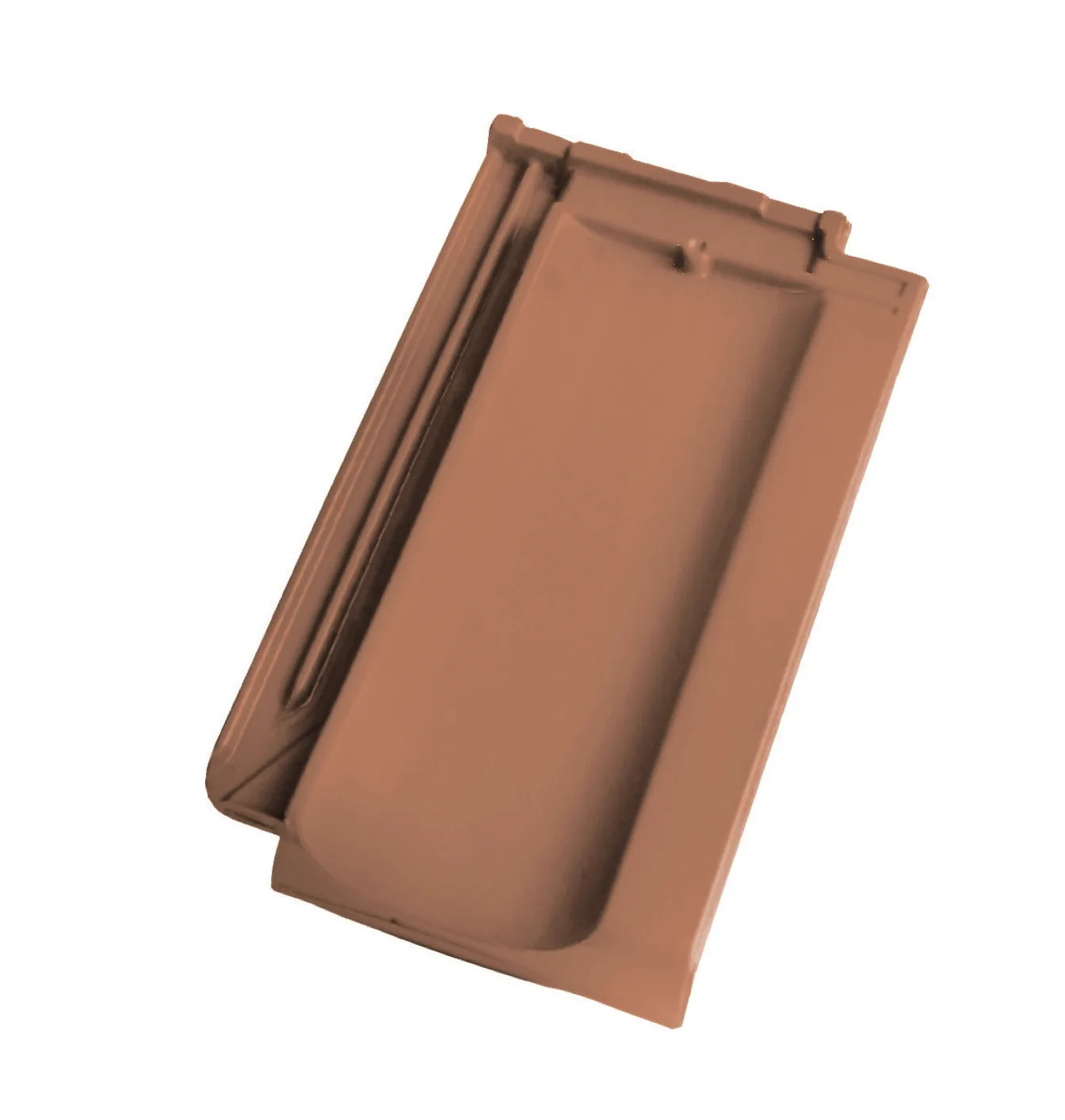
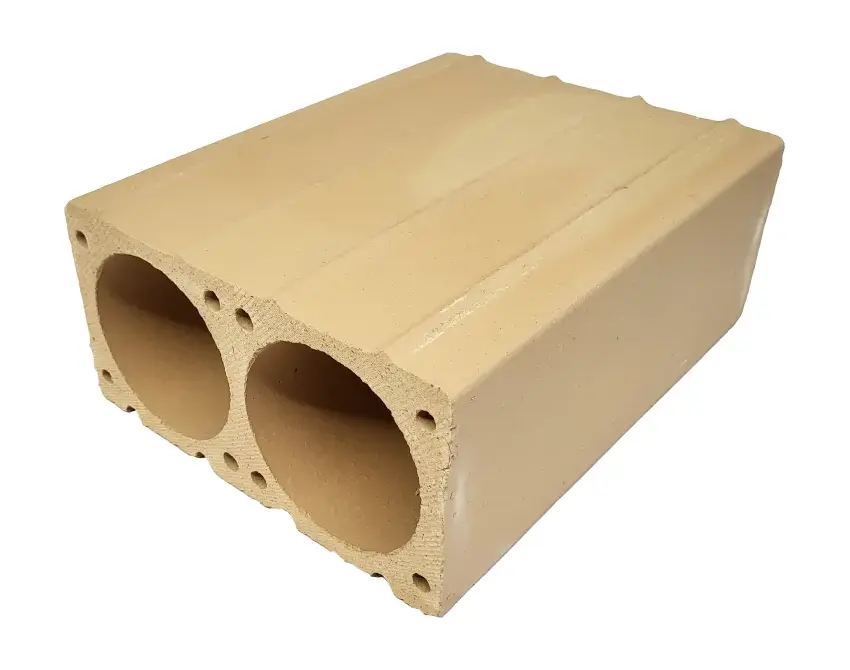
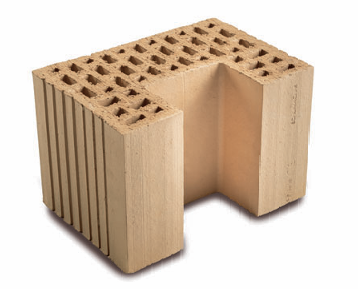
A brick (in German «Backstein» or «Ziegelstein», which mean the same thing) is a masonry unit made of fired clay. Klinker is fired at a higher temperature, until it sinters, which makes it denser and harder; it is used for exposed facades.
For load-bearing and non-load-bearing interior and exterior walls that will be plastered, the SwissModul standard brick is the default choice. For exterior walls without additional insulation there is the MONOBRICK insulating brick, for walls between apartments and stairwells the Calmo sound-insulating brick, and for seismic requirements the reinforced Armo masonry.
Our bricks are made of 100 % clay from our own pit close to the works. The clay is shaped and fired in a tunnel kiln at around 1020 °C — a purely natural product from Central Switzerland.
Directly from us: Ziegelei Schumacher AG, Körbligen 9, 6038 Gisikon (LU), Switzerland. Prices are in the 2026 price list; we take orders by order form, phone or e-mail. Our advisors are happy to help you choose the right brick.
An exterior wall made of two masonry leaves: the inner leaf (e.g. 15 cm) carries loads, the outer leaf (e.g. 12.5 cm) protects against the weather and forms the facade. Core insulation sits between them, and wall ties connect the leaves. With 16 to 24 cm of mineral wool the wall reaches U-values of 0.17 to 0.12 W/m²K and a sound reduction index R'w of approx. 60 dB. If the outer leaf is klinker, it is called exposed masonry.
A wall made of one layer of bricks whose width equals the wall thickness. With external insulation (e.g. 15 cm brick and 18 to 24 cm EPS) it reaches U-values of 0.17 to 0.13 W/m²K. In insulating single-leaf masonry such as MONOBRICK (λ = 0.074 W/mK) the brick itself carries and insulates: at 30 to 49 cm, U-values down to 0.15 W/m²K are possible with no extra insulation layer.
It depends on the project. Cavity masonry offers very high sound insulation (R'w approx. 60 dB) and a durable klinker facade but needs more wall thickness. Single-leaf masonry with external insulation is economical and proven in new build and renovation (R'w approx. 44 dB). Insulating single-leaf masonry is purely mineral and needs no insulation material. The masonry handbook (downloads) details the build-ups; our advisors will help you choose.
Fully mortared means mortar in both bed and vertical joints, recommended for shear and load-bearing walls, outer leaves and exposed masonry. Dry-jointed tongue-and-groove bricks (N+K) interlock at the sides and need no vertical-joint mortar, suited to walls with a mainly vertical load-bearing function. Under SIA 266, bricks must overlap by at least 60 mm in the bond.
The most common are stretcher bond, English bond, English cross bond and random bond. In stretcher bond all bricks are laid lengthwise, each course offset by half a brick. English bond alternates courses of stretchers and headers, with head joints aligned vertically. English cross bond is like English bond, but every second stretcher course is offset by half a brick, creating a cross pattern. In random bond, stretchers and headers are mixed irregularly with no repeating pattern. Stretcher bond is standard for plastered masonry; on klinker facades the bond shapes the look of the facade.
Next Step
Our specialist advisors support you in choosing the right masonry — from planning to execution.